
Maintaining Ideal Body Condition for Pets
Ideal body condition is something many pet parents struggle to maintain. It’s easy for pets to pack on the pounds, especially when those pleading eyes come out. We love our pets and want to spoil them!
However, those extra pounds can come with serious health risks. A 2022 survey by the Association for Pet Obesity Prevention (APOP) found that 59% of dogs and 61% of cats were classified as overweight or obese. Conditions such as cardiovascular disease, metabolic disorders, joint issues, and even shortened lifespans are all linked to excess weight.
With this in mind, it’s clear why keeping an eye on your pet’s body condition is so important.
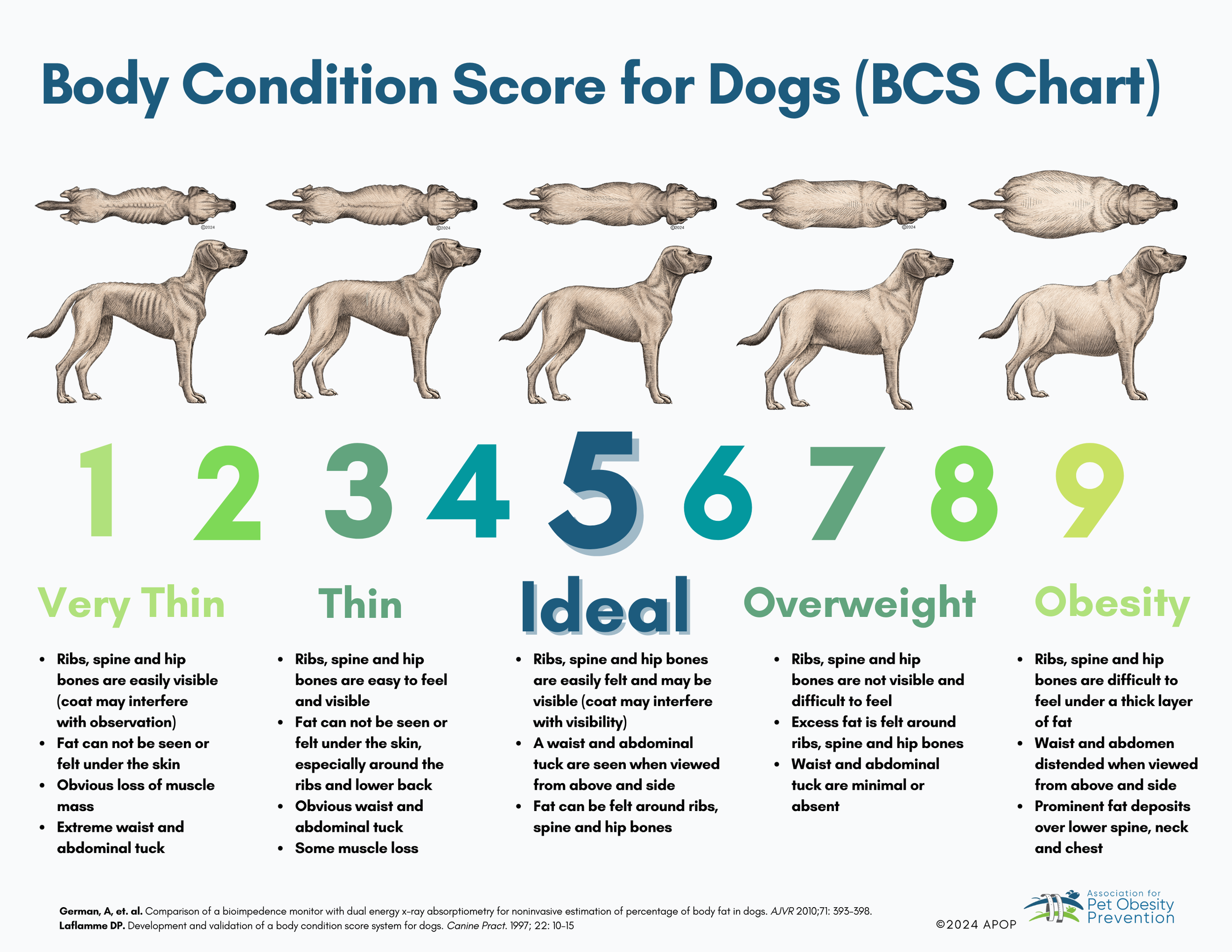
When evaluating your pet’s health, body condition matters more than weight alone. A number on the scale doesn’t tell you how much of that weight is fat vs. muscle. This is especially important in dogs, where breed and body shape can vary dramatically. Because of this, two pets at the same weight can have very different health profiles.
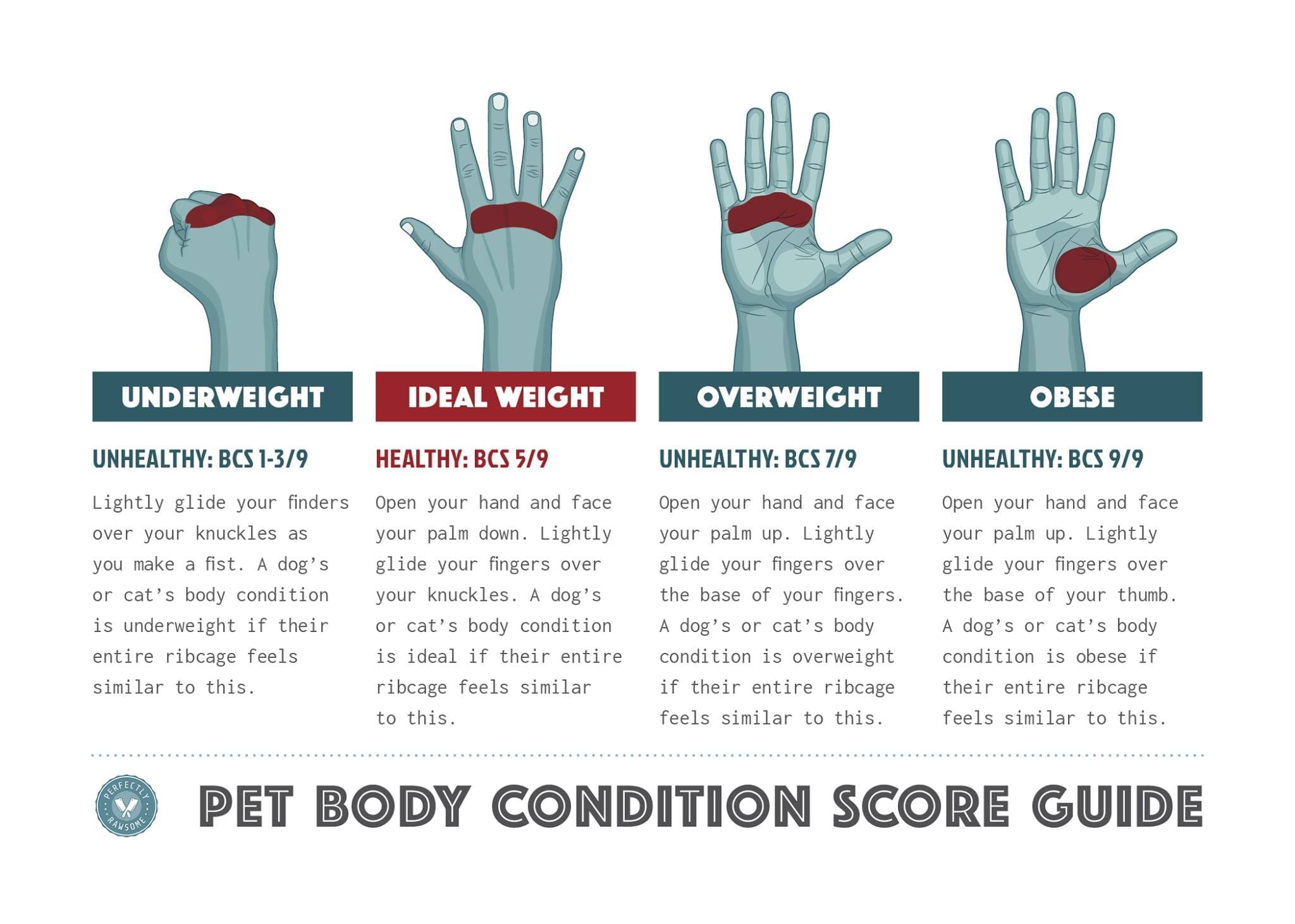
Your veterinarian is always the best resource for determining your pet’s ideal weight and condition. However, body condition charts are a great way to monitor your pet at home and stay on track between visits. Here are our favorite charts to reference:

Now that we’ve gained the skills to access our pets, what do we do if they need to lose weight?
Feeding plays a major role in maintaining a healthy weight. When managing weight for dogs, it’s important to feed based on your pet’s ideal weight, not their current weight.
For cats, weight loss must be approached carefully. Rapid changes in diet or calorie intake can disrupt their system and may lead to Hepatic Lipidosis, a serious and potentially life-threatening condition. Always aim for slow, gradual weight loss in cats.
How do you determine how much your pet needs in a day? We strongly recommed looking at calories, not just cups of food.
CLICK HERE for a calorie calculator tool for dogs - CLICK HERE for a calorie calculator for cats
Treats add up quickly. On days when your pet is getting extra treats, adjust their meal portions to stay within their daily calorie goal.
If your pet isn’t thrilled about smaller portions, there are ways to help. Try soaking kibble in warm water before serving—this can increase volume, promote hydration, and help your pet feel fuller without adding calories.
Daily exercise, whether it’s walks, running, play, etc is just as important as diet when it comes to maintaining a healthy weight.
Not sure where your pet falls on the chart, or how to begin a weight loss plan? Let us help! Stop by anytime and our team can help you assess your pet’s body condition and build a plan with the right food, portions, and supplements to support a healthy weight.